Skip to content


The role of bedside nursing is becoming increasingly important as healthcare systems become more complex and patients require more specialized care. Bedside nurses play a crucial role in improving patient outcomes, enhancing patient satisfaction, and increasing healthcare efficiency.
However, not all bedside nurses have the necessary tools and the time they need to provide high-quality, compassionate care. Nurses often have to juggle multiple patients and priorities simultaneously, which can lead to burnout, as well as potentially compromised patient care.

Nurses’ Role in Patient Care
This article explores how healthcare organizations can recognize the critical role of bedside nurses in patient care and invest in the necessary time and technology resources to support the delivery of high-quality care.
- Bedside nursing explained
- The benefits of bedside nursing
- Advocacy for bedside nursing
- Compassionate technology for bedside nursing
Bedside Nursing Explained
The CDC defines direct patient care as face-to-face contact between nurses and their patients for the purposes of assessing, diagnosing, or treating illnesses or injuries. Bedside nursing is direct patient care that occurs in various care settings and is considered a cornerstone of healthcare systems.
Beyond basic clinical care, such as administering medications and monitoring vital signs, bedside nurses also provide compassion – a therapeutic aspect of nursing that can significantly benefit patient outcomes.
Bedside nurses who provide a high level of compassion to their patients observe:
- Higher healthcare team morale and job satisfaction.
- Increased caregiver trust and satisfaction within the healthcare industry.
Bedside nurses provide holistic nursing, which encompasses physical, emotional, and psychological support. They often serve as the first point of contact for patients and their families, acting as patient advocates to ensure patient voices are heard and patient rights are protected.

The Benefits of Bedside Nursing
While doctors play a critical role in forming diagnoses and developing treatment plans, nurses spend significant time helping patients heal and find comfort on a daily, even hourly, basis.
- Bedside Nursing and Patient Pain Management:
- Bedside nurses are the first responders to patient pain needs. They assess pain levels, implement appropriate pain management strategies, and advocate for their patients’ needs.
- Research suggests that patient pain can result in increased hospital stays. However, research also indicates that compassionate bedside nursing can decrease patient pain by providing patients with therapeutic relief that helps them successfully manage pain.
- Through their expertise and compassionate care, bedside nurses help ensure patients are as comfortable as possible during their hospital stay.
- In addition to helping patients manage ongoing pain, compassionate support from bedside nurses can also alleviate patient anxiety during medical interventions.
- Whether patients are nervous about a first-time procedure, or have anxiety about recurring treatment, bedside nurses utilize their communication skills to build trust with patients and provide reassurance.
- The positive effects of compassionate bedside nursing may include:
- Providing safer patient care
- Increasing patient satisfaction with care
- Improving patient self-confidence when coping with new or chronic illnesses
- The compassionate care provided by bedside nurses can also help reduce the risk of healthcare-associated infections (HAIs).
- A bedside nurse who frequently checks on patient wounds or IV connections, and regularly assesses a patient’s pain level, is strategically positioned to identify signs of infection.
- Bedside nurses are also responsible for implementing and enforcing infection prevention and control measures such as hand hygiene, the use of personal protective equipment (PPE), and isolation precautions to prevent the spread of infection.
- Additionally, nurses educate patients and their families about infection prevention and control measures to minimize the risk of acquiring or spreading infections.
- Infection prevention can lead to reduced costs, shorter hospital stays, increased efficiency, and improved patient satisfaction.

Advocating for Bedside Nursing: Importance of Time and Tools
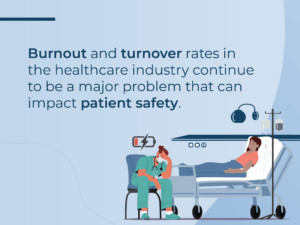
Job satisfaction in nursing deteriorated during the COVID-19 years, and burnout and turnover rates in the healthcare industry remain a significant problem that can impact patient safety. Change begins with advocacy for improvements at the bedside – both for nurses and patients.
Investing in compassion-led medical care may help to:
- Increase clinician job satisfaction
- Improve patient outcomes
- Benefit the healthcare industry as a whole
Nurses give a great deal to their patients – sometimes at the risk of their own health. When healthcare managers and corporate leaders provide the time and tools nurses need to do their jobs effectively, the benefits increase for everyone.
Supporting Bedside Nurses with Tools Designed for Everyday Care
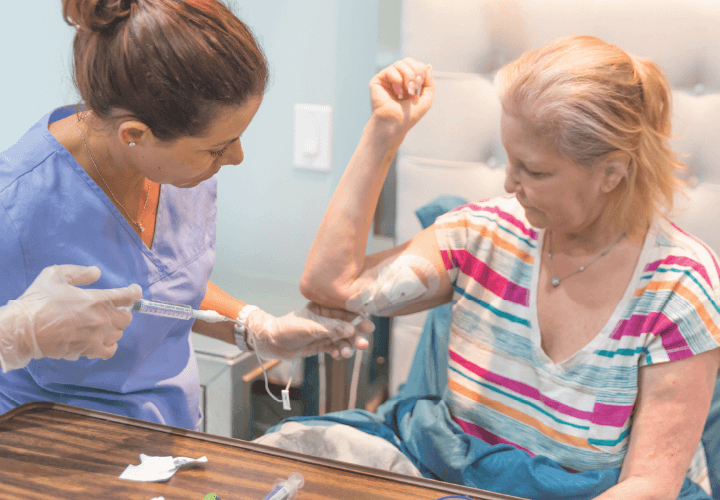
Compassionate bedside care takes skill, attention, and time. Nurses notice when an adhesive is uncomfortable, when a dressing needs attention, or when an IV connection may have been exposed during routine care. Supporting that work means providing tools that reflect the situations nurses encounter throughout a shift.
For patients receiving IV therapy, dressing selection is one part of that support. Skin condition, adhesive sensitivity, and the need to see the insertion site all deserve consideration. Understanding the differences between acrylic and silicone IV dressings can help inform conversations about dressing options for patients with sensitive or fragile skin.
Care also continues between dressing changes and moments of IV access. Emesis, secretions, spills, and other routine exposures can bring gross contamination into contact with primary dressings and IV line connections. These are practical challenges that deserve attention alongside established care practices.
Covalon’s approach recognizes both the patient receiving care and the nurse providing it. From silicone IV dressings to barrier protection for primary dressings and IV access points, our products are designed for the realities of clinical care.
For a closer look at everyday exposure situations and protection considerations, explore our practical guide, Protecting IV Line Connections at the Bedside.
References
- J Public Health (Berl.): The importance of compassion and respectful care for the health workforce: a mixed-methods study
- Journal of Oncology, vol. 2021,: Effect and Nursing Satisfaction of Bedside Nursing Combined with Detail Nursing in Clinical Nursing of Gastroenterology Department
- ‘All these things don’t take the pain away but they do help you to accept it’: making the case for compassion-focused therapy in the management of persistent pain
- McKinsey & Company – Healthcare’s next chapter: What’s ahead for the US healthcare industry
- CDC – NHSN Healthcare Personnel Safety Component Key Terms
- Springer Nature – The importance of compassion and respectful care for the health workforce
- Northeastern State University – What is holistic nursing?
- Oncology Nursing News – Six ways nurses can advocate for patients
- Iranian Journal of Nursing and Midwifery Research – Effects of pain management program on the length of stay of patients with decreased level of consciousness
- Journal of Oncology – Effect of Nursing Satisfaction of Bedside Nursing Combined with Detail Nursing in Clinical Nursing of Gastroenterology Department
- Environmental Research and Public Health – Impact of Nurse-Patient Relationship on Quality of Care and Patient Autonomy in Decision Making
- British Journal of Pain – ‘All these things don’t take the pain away but they do help you to accept it’
- American Nurse – Compassionate Connections
- CDC – Types of healthcare-associated infections
- Nursing – Infection Prevention and Control Core Practices
- Modern Healthcare – Infection control can reduce costs, improve outcomes
- CNN – About 100,000 nurses left the workforce due to pandemic-related burnout and stress
- Health Expectations – More than a feeling? What does compassion in healthcare look like to patients?
- Journal of Nurses Professional Development – Engaging Bedside Nurse in Research and Quality Improvement
- John Hopkins Medicine – Making their voices heard
- British Journal of Nursing – Infection control and the bedside nurse