 Skip to content



Gross Contamination Protection
Protect the IV pathway from the realities of bedside care.
IV care is built around clean, controlled moments. Between those moments, primary dressings, IV line connections and access points can encounter bodily fluids, secretions, spills and contaminants in the patient environment.
THE GAP BETWEEN CARE MOMENTS
Contamination doesn’t wait for the next access event.
Established practices address essential moments such as skin preparation, dressing application, hub disinfection and aseptic access. Gross contamination can also reach the outside of primary dressings and IV line connections during routine care.
Patient environment
Gross contaminants
IV components at risk of contact
Toileting • Emesis • Secretions • Drainage • Spills • Soiled linens • Patient and caregiver hands
One IV pathway. Two vulnerable areas.
01
The primary dressing
The primary dressing protects the insertion site, but its outer surface and edges can encounter gross contamination during routine care.
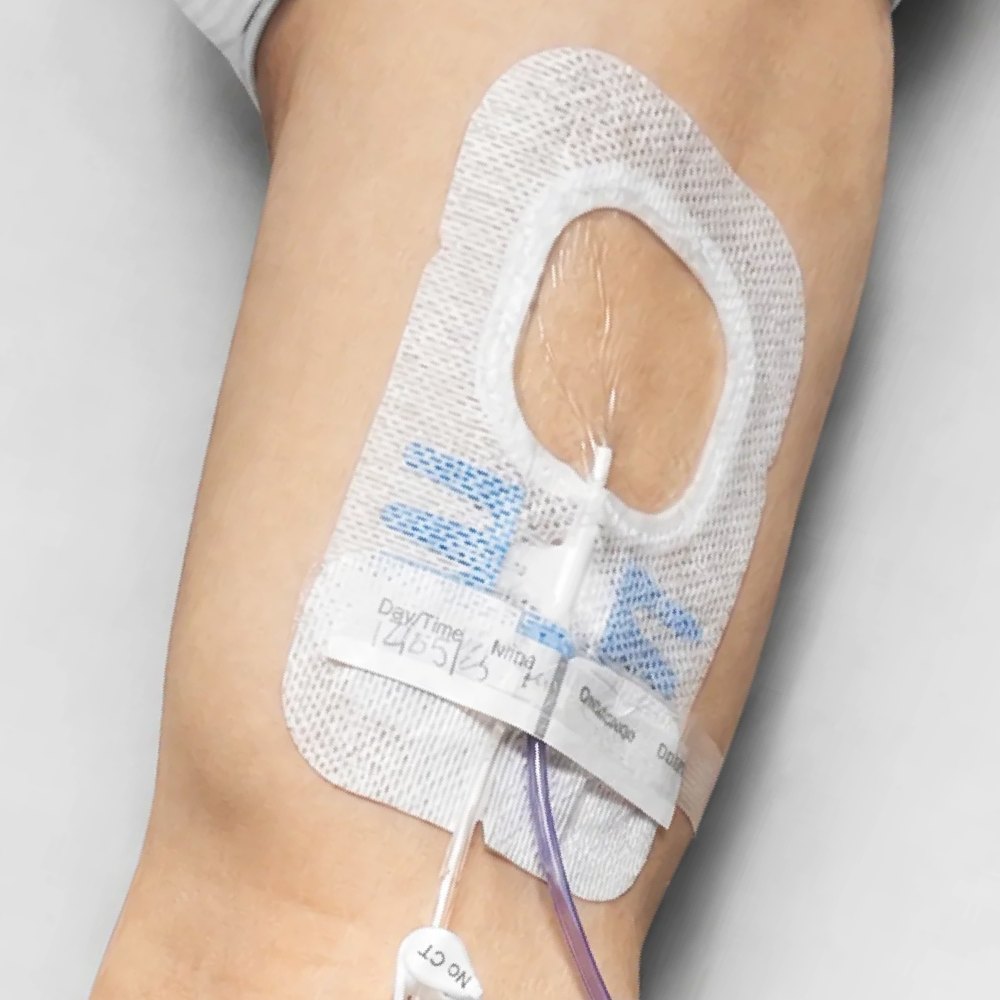 Without added barrier
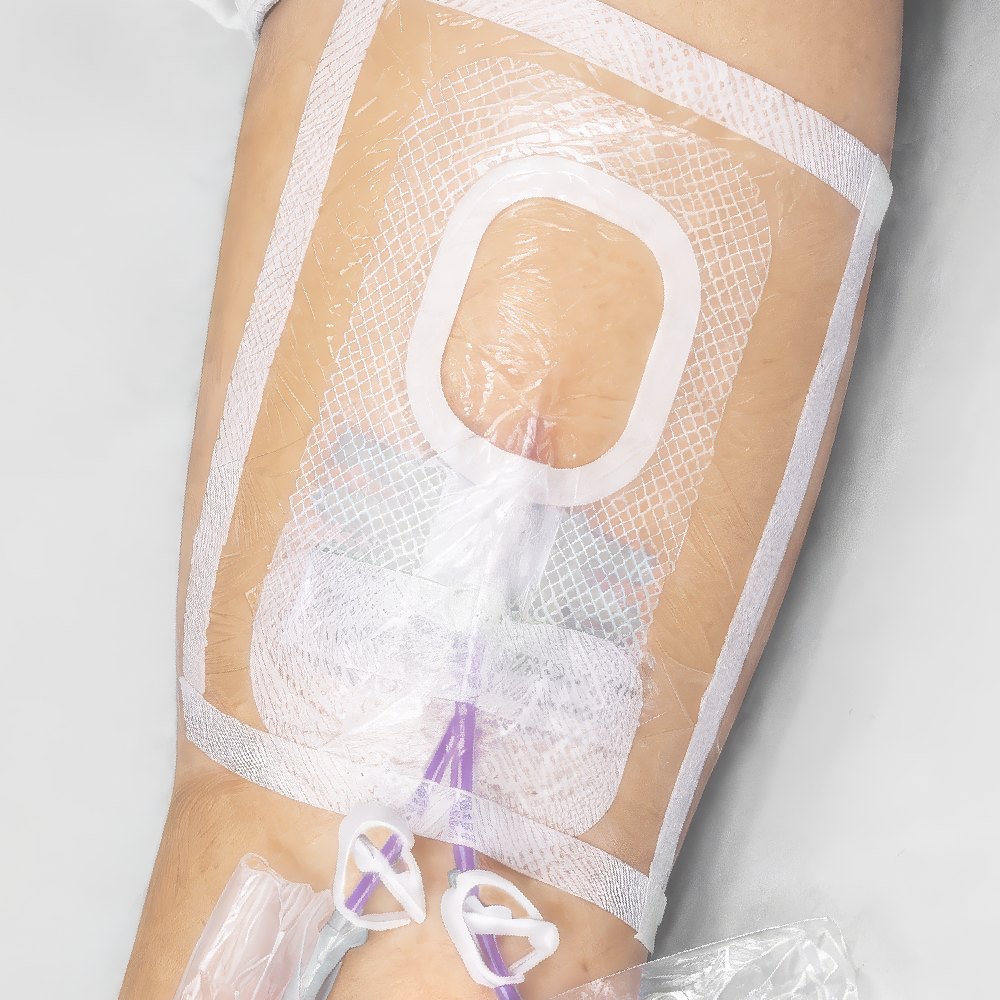 With added barrier
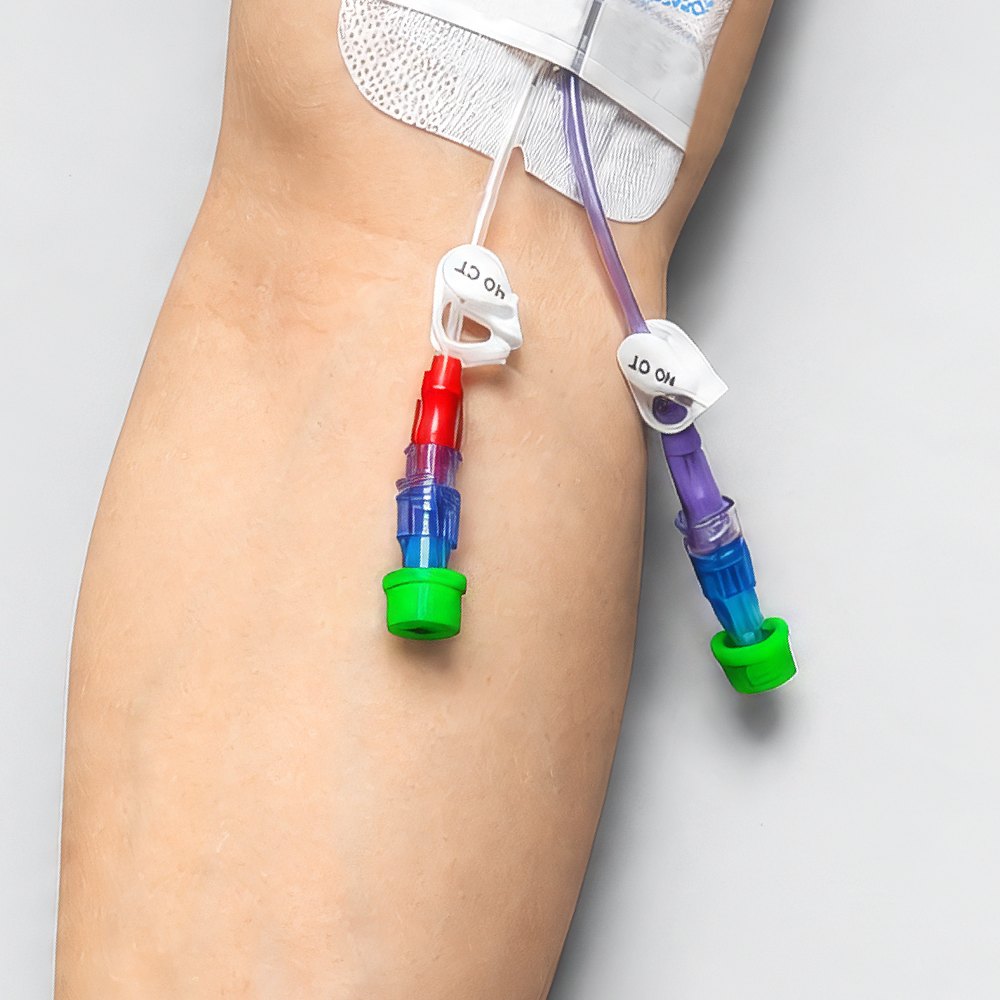 Without added barrier
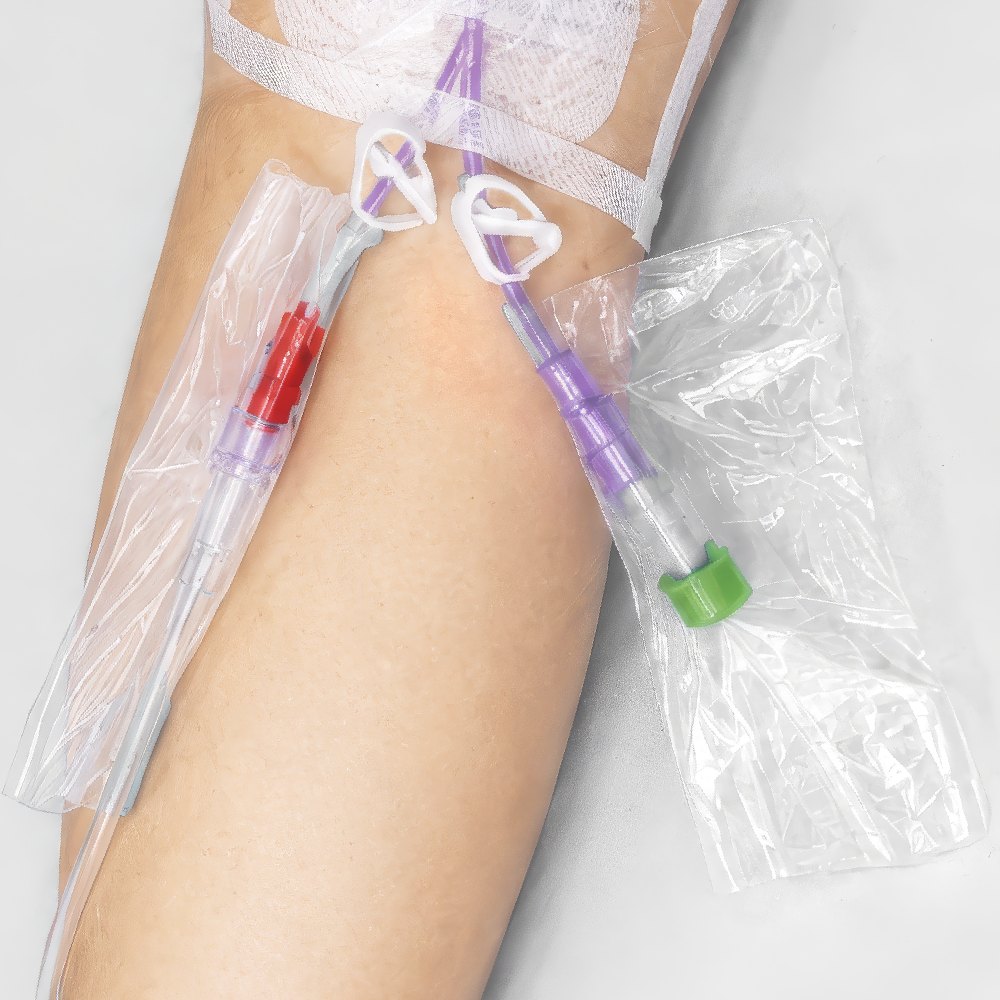 With added barrier
02
IV line connections and access points
The outside of connections and access points can come into contact with contaminants in the patient environment.
THE EVIDENCE
Dressing integrity and connector contamination matter.
Published research highlights challenges with catheter dressing integrity and connector contamination.
of catheter dressing changes in a seven-ICU study occurred earlier than scheduled because of soiling or dressing disruption.1
Timsit JF, et al. Critical Care Medicine. 2012.
A 2015 systematic review described colonization of catheter hubs and needleless connectors as the presumed cause of 50% of post-insertion catheter-related infections.2
Moureau NL, Flynn J. Nursing Research and Practice. 2015.
These studies describe catheter-care challenges and did not evaluate CovaClear® or VALGuard®.
Protect the pathway at both areas.
Two purpose-built barriers address two different areas of gross contamination exposure.
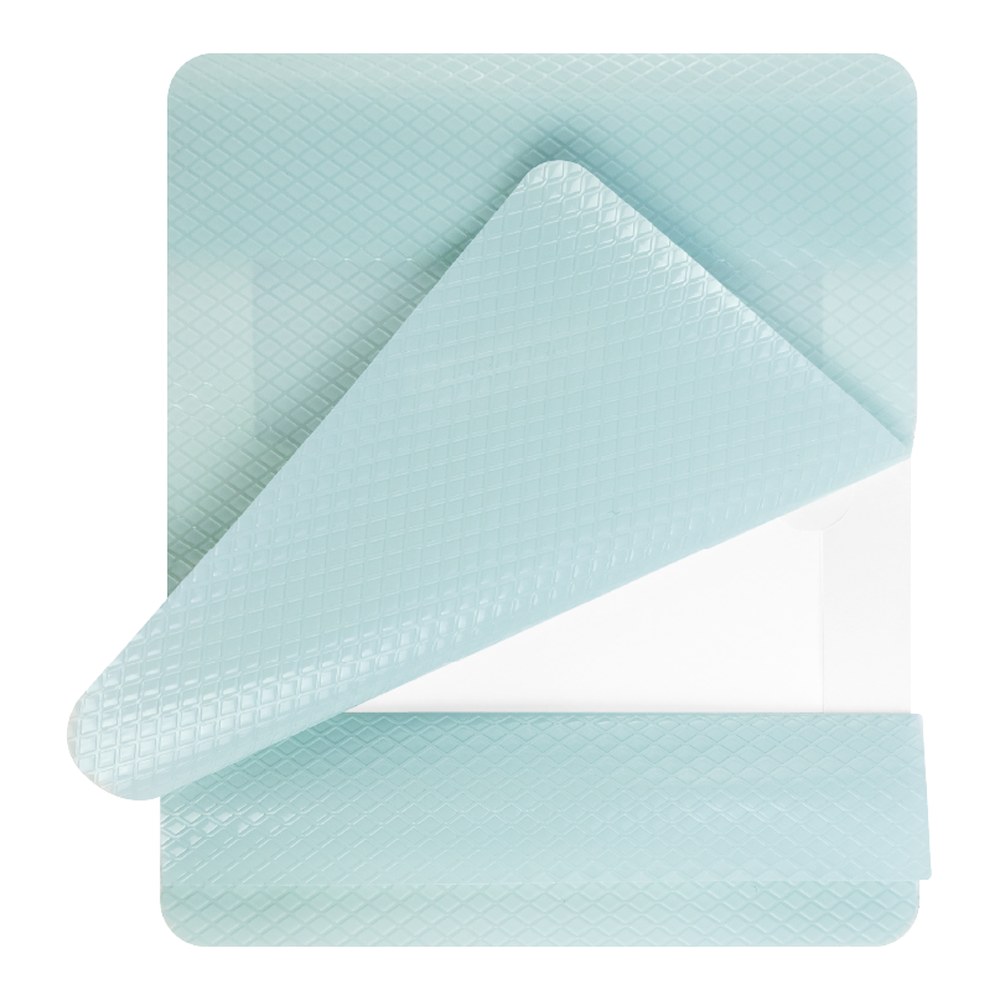
CovaClear®
Primary dressing cover
Covers the primary dressing to help protect it from gross contamination while keeping the insertion site visible.
- Covers the existing primary dressing
- Transparent for site visibility
- Added physical barrier

VALGuard®
Vascular Access Line Guard
Protects IV line connections and catheter hubs from gross contamination.
- Shields hubs and line connections
- Allows visual inspection
- Easy to remove
An added layer of gross contamination protection, used alongside established dressing care, disinfection and aseptic practices.
A PRACTICAL RESOURCE FOR NURSES
Explore gross contamination protection in everyday care.
Read our practical guide to protecting IV line connections and access points.
Add a layer of gross contamination protection.
Protect the primary dressing. Protect IV line connections and access points.
References
- Timsit JF, Bouadma L, Ruckly S, et al. Dressing disruption is a major risk factor for catheter-related infections. Critical Care Medicine. 2012;40(6):1707–1714. https://doi.org/10.1097/CCM.0b013e31824e0d46
- Moureau NL, Flynn J. Disinfection of needleless connector hubs: clinical evidence systematic review. Nursing Research and Practice. 2015;2015:796762. https://doi.org/10.1155/2015/796762
VALGuard® Vascular Access Line Guard is indicated to cover and protect IV line connections and catheter hubs from sources of gross contamination. VALGuard® has not been cleared or approved by the U.S. Food and Drug Administration (FDA) for infection prevention or CLABSI reduction, and its safety and effectiveness for those purposes have not been established. A copy of the IFU will be provided upon request.